Unimasters | 15/05/2026

Series
IMDG/ADR Decoded: The Regulatory Handbook for BESS Transport
The documentation requirements for Battery Energy Storage System (BESS) shipments derive from two primary regulatory frameworks: the IMDG Code Amendment 42-24 (mandatory from 1 January 2026) for sea transport, and ADR 2025 for road transport within Europe. Both frameworks classify BESS as Class 9 dangerous goods and mandate specific documentation to ensure safe handling throughout the transport chain.
The authoritative texts are published by the International Maritime Organization (IMO) for IMDG and the United Nations Economic Commission for Europe (UNECE) for ADR. These are not suggestions-they are legally binding requirements that determine whether cargo moves or sits at port.
In plain terms: every BESS shipment requires a defined set of documents that prove the batteries have been tested, are properly classified, and can be safely transported. Missing or incorrect documentation does not result in a polite request for clarification-it results in cargo rejection, storage fees accumulating daily, and project timelines slipping.
BESS shipments occupy a unique position in the dangerous goods documentation landscape. Unlike consumer electronics containing small lithium cells, utility-scale BESS containers are classified under UN3536: Lithium Batteries Installed in Cargo Transport Unit (CTU). This classification applies when the container itself functions as the product enclosure-integrating battery modules, Battery Management System (BMS), thermal management, and fire suppression into a single unit.
The distinction matters because UN3536 triggers different documentation requirements than UN3480 (standalone lithium-ion batteries) or UN3481 (batteries contained in or packed with equipment). Special Provision 389 of the IMDG Code, which addresses securing batteries to the interior structure of the cargo transport unit, applies only to UN3536. Many other special provisions applicable to UN3480 and UN3481 do not apply to UN3536.
This is where documentation failures begin. Procurement teams familiar with consumer battery shipments sometimes assume the same paperwork applies. It does not. A Dangerous Goods Declaration (DGD) submitted under UN3481 for a containerized BESS unit is incorrect-and incorrect classification cascades through every subsequent compliance step.
The IMDG Code Amendment 42-24 introduced additional requirements specifically relevant to BESS:
Each of these requirements must be documented. The carrier will verify. The port authority may inspect. The documentation either confirms compliance or it does not.
Every BESS shipment moving by sea requires the following documents. This is not a menu from which to select-it is a checklist where every item is mandatory.
1. UN38.3 Test Summary
Prepared by: The Manufacturer
The UN38.3 Test Summary certifies that the battery model has passed the eight mandatory tests defined in the UN Manual of Tests and Criteria, Part III, Sub-section 38.3:
The test summary must correspond to the exact cell and pack configuration being shipped. Any design change-cathode formulation, electrolyte additive package, separator supplier-requires retesting. A test report for cells produced at one factory does not cover cells produced at a different facility, even if the model number is identical.
The UN38.3 Test Summary is required for transport compliance and should be on file from the sea leg. Customs authorities do not typically request it for verification-this is a transport document, not a customs document.
2. Material Safety Data Sheet (MSDS) / Safety Data Sheet (SDS)
Prepared by: The Manufacturer
The MSDS must accurately identify:
A generic MSDS covering multiple battery models is not acceptable. The document must be specific to the product being shipped.
The MSDS is required by the carrier for cargo acceptance at origin. Import customs authorities rarely request MSDS for BESS-there is no HS code ambiguity for batteries. The MSDS becomes a customs issue only for chemical products where tariff classification is disputed.
3. Dangerous Goods Declaration (DGD)
Prepared by: The Shipper
The DGD is the formal declaration that the shipment complies with all applicable dangerous goods regulations. For BESS, it must include:
The DGD must be prepared and signed by a qualified dangerous goods professional. This is the most frequently incorrect document on first-time BESS bookings-containers are often incorrectly declared under UN3481 instead of UN3536.
4. Bill of Lading (B/L)
Prepared by: The Maritime Carrier (or Freight Forwarder acting as a contractual carrier (NVOCC))
The Bill of Lading serves as:
For BESS shipments, the B/L must accurately reflect:
The B/L is not always electronic-physical B/L remains common, especially when a Letter of Credit (L/C) is the payment instrument. The draft B/L is for data verification and approval only; the final version is issued by the carrier afterward.
Weight discrepancies occur between the Packing List and Bill of Lading, not between Commercial Invoice and Packing List. The root cause: manufacturers often provide Packing List weight based on standard/design specifications, while the VGM (Verified Gross Mass) declaration-based on actual weighing after final production and internal securing-reflects the true weight. The fix: ensure the Packing List reflects actual weighed cargo aligned with VGM data before B/L issuance.
5. Commercial Invoice
Prepared by: The Manufacturer/Exporter
The Commercial Invoice must cite the correct HS code. For lithium-ion BESS batteries, the full 10-digit code is 8507.60.00.90. PCS (Power Conversion System) units-which are transformer stations with no hazard class-have a different HS classification and must be declared separately. Incoterms agreed must also be cited on the CI.
6. Packing List
Prepared by: The Manufacturer
The Packing List must specify:
Leading carriers require utility-scale BESS containers to load at 25%-35% SoC. This has moved from a carrier recommendation toward a port-level acceptance condition at major terminals.
7. Certificate of Origin
Prepared by: The Manufacturer/Exporter (certified by Chamber of Commerce)
Required for customs clearance and duty calculation. For BESS imports into the EU, the third-country duty rate for HS 8507.60.00.90 is 2.7% ad valorem.
For the inland leg from port to construction site, the documentation requirements differ. The ADR transport document must include:
The ADR transport document is prepared by the trucking company or freight forwarder. UN38.3 and MSDS are not road transport documents-they are retained on file but do not travel with the cargo.
Additional road transport requirements:
Every BESS shipment requires specific documents prepared by designated parties. Here is the complete breakdown:
UN38.3 Test Summary: Prepared by the Manufacturer in English, PDF format. This document remains on file and does not travel with cargo.
MSDS/SDS: Prepared by the Manufacturer in English, PDF format. This document remains on file and does not travel with cargo.
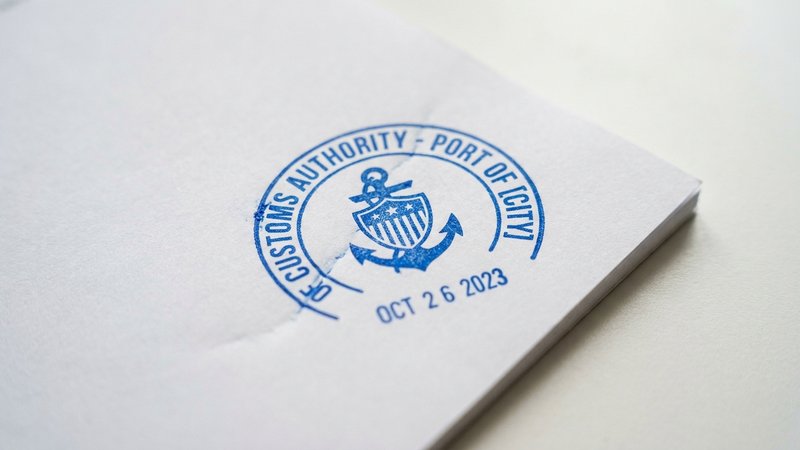
The smallest mark carries the weight of global commerce. Without this seal, cargo stays put.
Dangerous Goods Declaration: Prepared by the Shipper in English using carrier template. This document is transmitted separately and does not travel with cargo.
Bill of Lading: Prepared by the Carrier/Forwarder in English using carrier format. This document is transmitted separately and does not travel with cargo.
Commercial Invoice: Prepared by the Manufacturer in English, PDF format. This document is transmitted separately and does not travel with cargo.
Packing List: Prepared by the Manufacturer in English, PDF format. This document is transmitted separately and does not travel with cargo.
Certificate of Origin: Prepared by the Manufacturer in English with Chamber of Commerce certification. This document is transmitted separately and does not travel with cargo.
ADR Transport Document: Prepared by the trucking company in destination language, paper or electronic format. This is the only document that travels with the driver.
In general, no documents physically travel with the cargo. Shipping documents are transmitted electronically or via courier to the consignee and customs broker separately from the physical shipment.
Error 1: Wrong UN Number on DGD
Containerized BESS units are UN3536, not UN3481. This error is the most common cause of booking rejection in early 2026.
Error 2: Weight Discrepancy Between Packing List and B/L
The Packing List uses design specifications; the VGM reflects actual weight after production. Discrepancies of 500-1,000 kg per container are not unusual. Reconcile before B/L issuance.
Error 3: Missing SoC Declaration
The DGD must confirm State of Charge ≤30%. Omitting this declaration gives the carrier grounds to reject the booking.
Error 4: Generic MSDS
An MSDS covering "lithium-ion batteries" generically does not satisfy the requirement. The document must be specific to the battery model being shipped.
Error 5: Incorrect HS Code
Declaring all BESS equipment under one tariff number is incorrect. Batteries (8507.60.00.90) and PCS units have different classifications. The customs broker must classify them separately.
Enforcement of dangerous goods documentation in Central and Eastern Europe varies by port and by country-but the variation is narrower than many procurement teams assume.
At Burgas and Varna (Bulgaria):
Customs authorities verify DGD completeness and cross-reference against the B/L. Containers with documentation discrepancies are flagged for inspection before release. The inspection itself is not adversarial-it is procedural. Problems arise from client delays in preparing documents or incorrect tariff classification, not from hostile customs authorities.
At Constanța (Romania):
As the largest container terminal in the Black Sea, Constanța can process big BESS volumes and has developed standardized verification procedures. ICS2 advance cargo information is an EU-wide requirement, not Romania-specific-but Constanța's systems are well-integrated with the EU customs data exchange.
At Piraeus (Greece) and Koper (Slovenia):
These transshipment hubs handle fiscal clearance for cargo destined to other countries. If clearance occurs at the transshipment port, EORI registration in that country (Greece, Slovenia) is required-or use of a fiscal representative. If T1 customs transit is used, EORI is required in the final import clearance country.
The practical reality: customs clearance for BESS is straightforward with correct documentation. Budget 3 working days with perfect documentation. With documentation problems, up to 10 working days is not uncommon.
Scenario 1: UN Number Mismatch
A procurement team books a BESS shipment with documentation prepared under UN3481 (batteries contained in equipment). The carrier's DG desk rejects the booking because containerized BESS units require UN3536 classification. The shipment misses its vessel. The next available DG slot is 14 days later. Storage fees accumulate from the moment of discharge at loading port.
Scenario 2: Weight Documentation Discrepancy
The Packing List shows 42,500 kg per container based on design specifications. The VGM declaration shows 43,200 kg based on actual weighing after final production and internal securing. The B/L is issued with the VGM figure. Customs flags the discrepancy with the Packing List. Clearance is delayed while documentation is reconciled. The delay risks the commissioning window-though grid connections are never scheduled for the very last moment, a 10-day delay is serious.
Scenario 3: Missing SoC Confirmation
The DGD is complete except for State of Charge confirmation. The carrier requests clarification. The shipper confirms SoC is 28%-but the confirmation takes 48 hours as the production team must verify against shipping records. The shipment misses the cut-off date and is rolled to the next vessel.
Scenario 4: HS Code Classification Error
All BESS equipment-batteries and PCS units-is declared under a single HS code. Customs requires separate classification. The broker must refile. The delay is 1-3 working days while the correct tariff codes are applied and duty calculations are revised.
For a downloadable BESS documentation checklist aligned with IMDG 42-24 and ADR 2025 requirements, contact the Unimasters BESS logistics team.
Q: What is the correct UN number for containerized BESS shipments?
A: UN3536 (Lithium Batteries Installed in Cargo Transport Unit) applies when the container functions as the product enclosure with integrated battery modules, BMS, and thermal management. UN3481 is incorrect for this configuration.
Q: What State of Charge limit applies to BESS sea transport?
A: IMDG Code Amendment 42-24 requires SoC ≤30% of rated capacity for UN3536 shipments. This must be confirmed on the Dangerous Goods Declaration. Sea transport already limits SoC to ≤30%, so containers cannot arrive at port with higher charge levels.
Q: Who prepares the Dangerous Goods Declaration for BESS shipments?
A: The shipper prepares and signs the DGD. The document must be prepared by a qualified dangerous goods professional and include the correct UN number, proper shipping name, and SoC confirmation.
Q: Does customs request UN38.3 Test Summary during BESS import clearance?
A: Customs authorities do not typically request UN38.3 for verification. This is a transport compliance document required by the carrier at origin. It should be on file and available if requested, but it is not a standard customs clearance document.
Q: What is the correct HS code for lithium-ion BESS batteries?
A: The full 10-digit HS code is 8507.60.00.90. PCS (Power Conversion System) units have a different classification and must be declared separately. The EU third-country duty rate for 8507.60.00.90 is 2.7% ad valorem.
Q: How long does customs clearance take for BESS shipments in CEE?
A: With perfect documentation, budget 1-3 working days maximum. With documentation problems-incorrect tariff codes, weight discrepancies, missing certificates-up to 10 working days is not uncommon.
Q: What documents are required for the road transport leg from port to site?
A: ADR transport document, overweight permit (if applicable), and T1 customs transit document with commercial invoice and packing list (for bonded transport). UN38.3 and MSDS are not road transport documents-they remain on file but do not travel with the cargo.
Next in the series
New UN 38.3 test requirements, updated classification rules and the enforcement timeline that took effect 1 January 2026. What BESS transport teams must plan for now.

