Unimasters | 15/09/2026
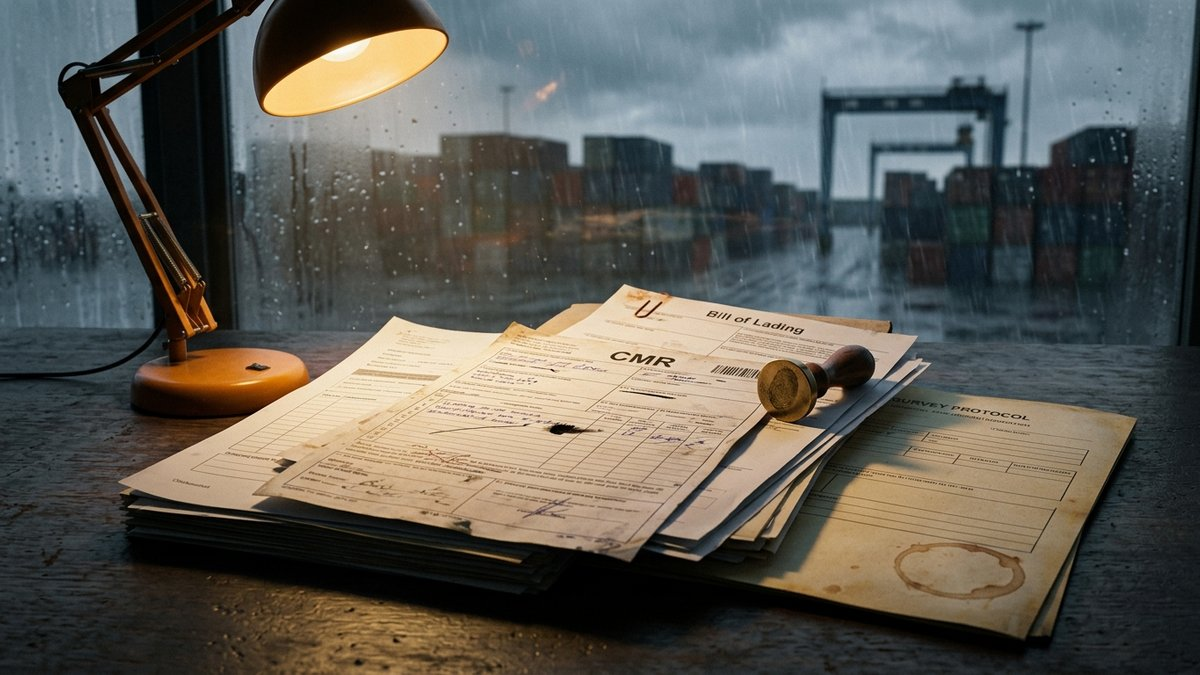
A BESS cargo claim is paid. The insurer transfers the settlement, the project team closes the file, and attention shifts to the next delivery. Three months later, an email arrives: the insurer's recovery department requests the original CMR consignment note, the joint survey protocol, and the carrier's written acknowledgment of damage. The documents were discarded after payout. The insurer's subrogation claim against the carrier is now unenforceable, and the policy renewal conversation becomes considerably less comfortable.
The procedural moment this episode owns is subrogation: the insurer pays the claim and steps into the insured's rights against the carrier. The clock that matters is not the claim settlement date but the limitation period against the carrier, which started running at delivery (road) or discharge (sea). The pen is held by the project team, whose evidence preservation and timely notification determine whether the insurer can recover anything at all.
Subrogation is not a separate claim. It is the legal transfer of the insured's existing claim against the carrier to the insurer who paid the loss. The insurer can recover only what the insured could have recovered, subject to the same limitation periods, the same notice requirements, and the same evidentiary burdens.
Under CMR (Geneva 1956) Article 32, the limitation period for claims arising from carriage is one year from the date of delivery. For partial loss, damage, or delay, time runs from the date the goods were delivered. For total loss, it runs from the thirtieth day after the agreed time limit, or the sixtieth day after the carrier took over the goods if no time limit was agreed.
The one-year period applies to ordinary negligence. Where the carrier acted with wilful misconduct or default equivalent to wilful misconduct (Article 32(1)), the limitation period extends to three years. Proving wilful misconduct is the claimant's burden, and courts interpret it narrowly: gross negligence alone does not suffice.
A written claim suspends the limitation period until the carrier rejects it in writing (Article 32(2)). Subsequent claims on the same grounds do not suspend it again. This means the insurer's subrogation claim must be filed before the original one-year period expires, unless the insured's own written claim was still pending at the time of payout.
Under the Hague-Visby Rules Article III rule 6, the carrier is discharged from all liability unless suit is brought within one year of delivery or the date when the goods should have been delivered. The one-year period is a hard cut-off; unlike CMR, there is no suspension mechanism for pending claims.
For BESS shipments arriving at Burgas or Constanța via feeder from Piraeus or Istanbul, the limitation period runs from discharge at the final port, not from the transshipment hub. The through bill of lading governs the entire voyage.
The insurer's right to pursue the carrier arises at the moment of payment. The policy's subrogation clause (standard in all Institute Cargo Clauses editions) requires the insured to preserve and assign all rights of recovery. The insurer steps into the insured's shoes: same claim, same evidence, same deadlines.
If the limitation period against the carrier has already expired by the time the insurer pays, the subrogation right is worthless. If the evidence needed to prove the claim has been destroyed, the subrogation right is unenforceable. The insurer's recovery department will ask for everything the insured should have preserved.
Subrogation claims fail not because the carrier was blameless but because the cargo side's own procedural lapses made the claim unprovable or time-barred. The insurer pays the insured, then discovers the recourse is dead.
The CMR consignment note is the primary evidence of the contract of carriage and the condition of goods at delivery. Article 9 of the CMR Convention establishes that the consignment note is prima facie evidence of the making of the contract, its conditions, and the receipt of the goods by the carrier. A reservation noted on the consignment note at delivery (per Article 30(1)) is the foundation of any damage claim.
After payout, project teams often treat the consignment note as administrative paperwork. It gets filed, then purged in a routine document cleanup. When the insurer's recovery team requests it six months later, the original is gone. Without the consignment note showing the reservation, the carrier's defence is simple: the goods were delivered in apparent good order.
For BESS containers arriving at a Bulgarian site after road carriage from Burgas, the consignment note is the only contemporaneous record of condition at delivery. The driver's copy may exist, but obtaining it requires the carrier's cooperation, which is unlikely once a subrogation claim is threatened.
Joint surveys conducted at discharge or delivery produce a protocol signed by the carrier's representative, the consignee, and the surveyor. This protocol documents the nature and extent of damage, the condition of packaging, and any visible cause. It is the evidentiary backbone of both the insurance claim and the subsequent subrogation action.
Survey protocols are often stored on project drives with limited retention policies. When the insurance claim closes, the project team archives or deletes the file. The insurer's recovery department, operating on a different timeline, requests the protocol after it has been purged.
Without the survey protocol, the insurer must prove damage through secondary evidence: photographs, internal emails, the surveyor's own records. Surveyors retain files for varying periods; some delete after two years. The carrier will argue that the damage occurred after delivery, or that the extent was exaggerated, and the insurer has no contemporaneous third-party document to rebut.
The one-year limitation under both CMR Article 32 and Hague-Visby Article III rule 6 runs from delivery or discharge, not from the date of claim settlement. Insurance claims can take months to resolve: surveys, documentation, coverage disputes, internal approvals. By the time the insurer pays, six or eight months may have elapsed. The insurer's recovery team then has only a few months to prepare and file the subrogation action.
If the insured's own written claim to the carrier was rejected before payout, the CMR suspension ended at rejection. If no written claim was ever filed (because the insured went straight to the insurer), the limitation period was never suspended. The insurer inherits whatever time remains.
For sea carriage, there is no suspension at all. The one-year period is absolute. If the insurer pays eleven months after discharge and takes another two months to prepare the subrogation file, the claim is time-barred.
A written acknowledgment from the carrier that damage occurred during carriage is powerful evidence. It is also rare. Carriers are advised by their insurers to admit nothing. But sometimes, in the immediate aftermath of an incident, a driver or terminal representative signs a statement or sends an email acknowledging the problem.
These informal acknowledgments are often not preserved. The site team receives an email from the driver's dispatcher apologising for the delay caused by the incident; the email is read, noted, and eventually deleted. The insurer's recovery team would have used it to establish carrier liability. Without it, the claim becomes a contest of competing narratives.
BESS containers are produced and sealed at the factory. The internal securing, the shock indicators, the humidity monitors, and the packaging materials are all evidence of whether damage occurred in transit or was pre-existing. When a claim is paid, the project team often disposes of packaging materials to clear the site for commissioning.
The carrier's defence in a subrogation action will frequently argue that the damage was caused by insufficient packaging (an exclusion under the CMR Convention, Article 17(4)(c)) or by the inherent nature of the goods. The packaging materials that would have rebutted this defence are in a skip.
A 230 MWh BESS project in Bulgaria receives a shipment of battery containers at the construction site. During unloading, the site team notes visible damage to one container's external casing. The damage is photographed, the forwarder is notified, and the insurance claim is filed. The surveyor attends, prepares a protocol, and the claim is paid within four months.
The project team, focused on commissioning, archives the survey protocol on a project drive scheduled for cleanup at project close. The CMR consignment note, signed with a reservation at delivery, is filed in a box of transport documents that is later discarded during site demobilisation. No written claim was ever sent to the road carrier; the team assumed the insurer would handle everything.
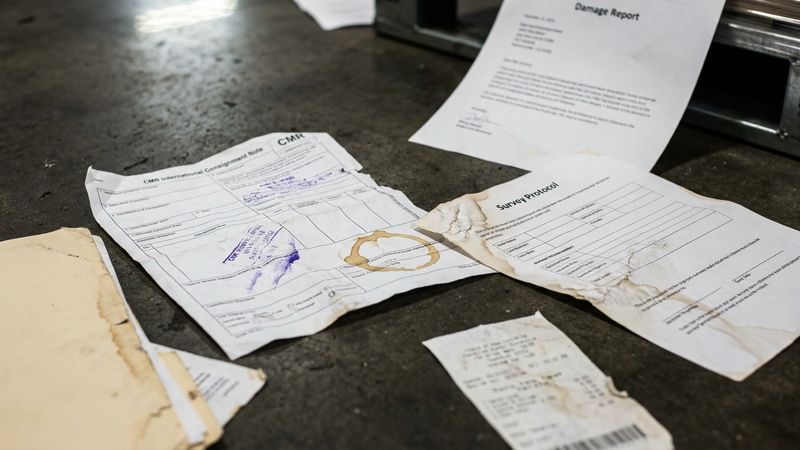
The paperwork nobody wanted to keep becomes the evidence everyone needs.
Eight months after delivery, the insurer's recovery department contacts the project office requesting the original consignment note, the survey protocol, and any correspondence with the carrier. The consignment note is gone. The survey protocol was deleted in the drive cleanup. The surveyor's office, contacted by the insurer, reports that their retention period is eighteen months and the file has been purged.
The insurer's subrogation claim against the road carrier is now unsupportable. The carrier denies liability, pointing to the absence of any contemporaneous documentation. The limitation period under CMR Article 32 expires two months later. The insurer absorbs the loss. The policy renewal includes a significant premium adjustment, and the insurer's underwriting notes flag the account for enhanced documentation requirements.
The mechanism: the project team treated the insurance payout as the end of the matter. The insurer's subrogation right, which depends entirely on the insured's preserved evidence and timely actions, was rendered worthless by routine document disposal.
Annotate the CMR consignment note with any visible damage, discrepancy, or concern before signing. Photograph the annotation. Retain the consignee's copy of the consignment note in a dedicated claims archive, not a general project file.
If a joint survey is conducted, obtain a signed copy of the protocol. Store it in the claims archive with the consignment note.
Preserve all packaging materials, shock indicators, and humidity monitors until the insurer confirms in writing that they are no longer needed. Do not dispose of packaging to clear the site.
File a written claim with the carrier within seven days of delivery for non-apparent damage (CMR Article 30(1)). This preserves the right to claim and, under CMR Article 32(2), suspends the limitation period until the carrier rejects the claim in writing.
Maintain a claims archive separate from routine project documentation. This archive should include: the original consignment note (or a certified copy), the survey protocol, all photographs, all correspondence with the carrier and forwarder, and any acknowledgments or statements from carrier personnel.
When the insurance claim is paid, do not close the file. Confirm with the insurer's recovery department what documents they require and when. Provide copies immediately; retain originals until the insurer confirms the subrogation action is concluded or time-barred.
The forwarder should provide, at the time of delivery, the CMR consignment note with the carrier's details and any annotations made during carriage. If the forwarder arranged the survey, they should provide the surveyor's contact details and a copy of the protocol.
The forwarder does not hand over manufacturer documentation, customs documents, or the bill of lading at site delivery. The relevant document is the land transport document (CMR consignment note for road carriage).
Request written confirmation from the insurer, at the time of claim settlement, of the documents required for subrogation. Confirm the retention period the insurer expects.
Ask whether the insurer intends to pursue subrogation and, if so, the timeline. If the insurer does not intend to pursue, obtain written confirmation so the project team can close the file with certainty.
Q: What is subrogation in the context of BESS cargo insurance?
A: Subrogation is the legal transfer of the insured's claim against the carrier to the insurer after the insurer pays the loss. The insurer steps into the insured's position and can recover from the carrier only what the insured could have recovered, subject to the same deadlines and evidence requirements.
Q: When does the limitation period for a road carriage claim start running under CMR?
A: Under CMR Article 32, the one-year limitation period starts from the date of delivery for partial loss, damage, or delay. For total loss, it starts from the thirtieth day after the agreed time limit, or the sixtieth day after the carrier took over the goods if no time limit was agreed.
Q: Can the CMR limitation period be suspended or extended?
A: Yes. Under CMR Article 32(2), a written claim suspends the limitation period until the carrier rejects it in writing. The three-year period under Article 32(1) applies only where the carrier acted with wilful misconduct, which courts interpret narrowly.
Q: Is there a suspension mechanism for sea carriage claims under Hague-Visby?
A: No. The one-year limitation under Hague-Visby Article III rule 6 is absolute. There is no suspension for pending claims. Suit must be brought within one year of delivery or the date when goods should have been delivered.
Q: What documents must be preserved for a successful subrogation claim?
A: The essential documents are the CMR consignment note (with any damage reservations), the joint survey protocol, all photographs of damage and packaging, correspondence with the carrier, and any written acknowledgments from carrier personnel. Packaging materials and condition indicators should also be retained.
Q: What happens if the project team discards documentation after the insurance payout?
A: The insurer's subrogation claim becomes unenforceable. Without the consignment note showing the reservation, the survey protocol documenting damage, or the packaging proving the cause, the carrier can deny liability. The insurer absorbs the loss, which typically affects future premium negotiations.
Q: Should the project team file a written claim with the carrier even if pursuing insurance?
A: Yes. Filing a written claim with the carrier within seven days of delivery (for non-apparent damage under CMR Article 30(1)) preserves the right to claim and suspends the limitation period. This protects the insurer's subrogation right regardless of how long the insurance claim takes to settle.

