

FCL or LCL: Which Is the Better Choice in a Dynamic Logistics Environment?
In a dynamic ocean-freight environment, choosing between FCL and LCL is becoming increasingly important for effective shipment planning.
Changes in routes, transit times and available capacity require a more flexible approach and careful assessment of the most suitable solution for each shipment.
In this article, we look at the main differences between FCL and LCL and when each option is more appropriate, especially in the context of current market conditions.
Ocean freight remains one of the most efficient modes of international trade. But when your cargo does not fill an entire container, an important question arises: LCL or FCL?
In this article, we will cover:
- What LCL (Less than Container Load) is
- What FCL (Full Container Load) means
- The main differences between LCL and FCL
- When each type of ocean transport is more suitable
What is LCL (Less than Container Load)?
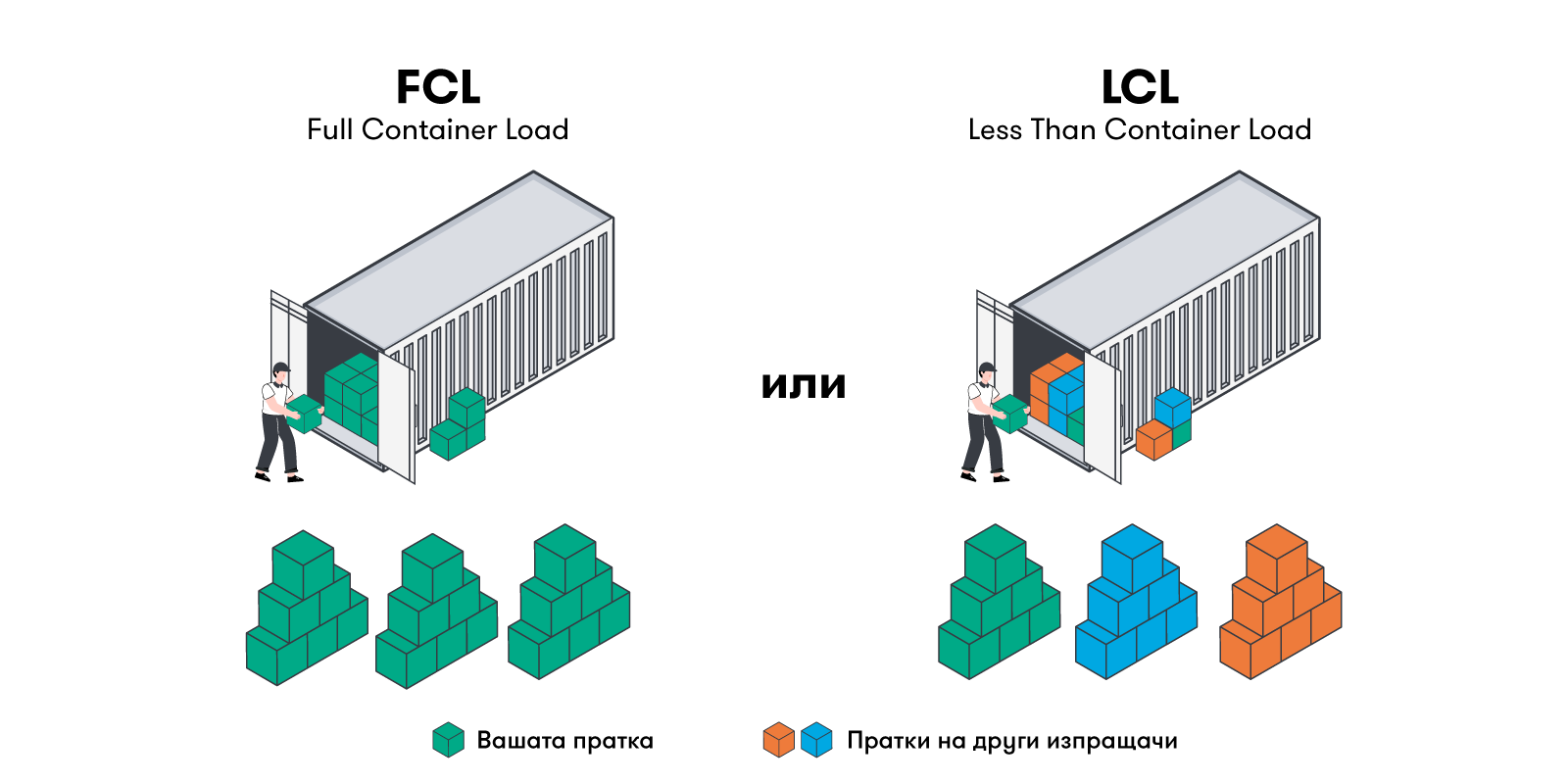
LCL (Less than Container Load) is a type of ocean freight in which cargo from different shippers is consolidated into one shared container. Modern containerisation began in the 1960s. Before that, goods were commonly transported as break-bulk cargo, with individual boxes, sacks and crates loaded manually, which was slow, expensive and risky.
As container shipping became established, the logistics industry developed a shared-container-space model to make transport accessible for smaller shipments as well. This is how the modern concept of LCL emerged.
In other words, if your cargo does not occupy the entire container, there is no need to pay for unused space.
You pay only for the volume (CBM) or weight your shipment occupies.
How does LCL transport work?
The process generally follows several main stages:
- The shipment is delivered to a consolidation warehouse
- It is checked, labelled and prepared for loading
- Goods from different customers are consolidated into one container
- After arrival, the container is deconsolidated and the individual shipments are distributed to their final destinations
Main advantages of LCL:
- You pay only for the space you use
- Suitable for small and medium-sized shipments
- A more flexible model for more frequent deliveries
- Better cash-flow optimisation
- Lower risk when entering new markets
LCL plays an important role in the development of small and medium-sized businesses, e-commerce and the globalisation of manufacturing.
In a dynamic market environment, it is also important to keep in mind that LCL transit times and conditions may vary more because of consolidation and additional cargo handling.
What is FCL (Full Container Load)?
FCL transport means that one container is used entirely by one shipper. Whether or not the container is fully packed, it is not shared with other cargo.
Advantages of FCL:
- Option for direct loading at the shipper's factory
- Shorter transit time because there is no consolidation or deconsolidation
- Lower risk of damage
- Full control over the cargo
- More flexible customs procedures because the container contains one shipment
FCL is often preferred for regular volumes, high-value cargo or when delivery time is critical.
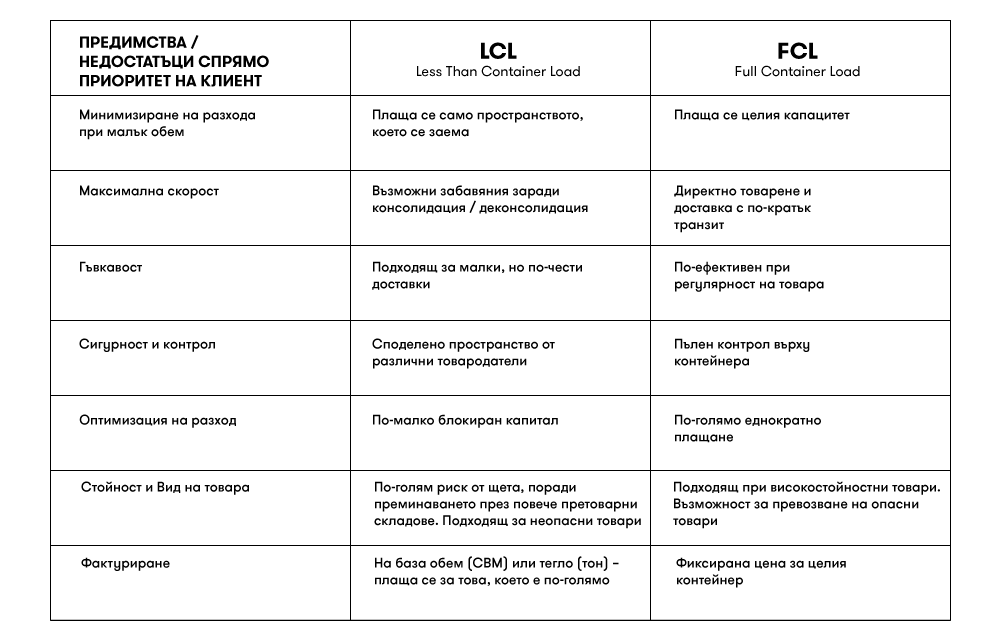
Difference between LCL and FCL – comparison
What should you choose right now – FCL or LCL?
In the current environment, the choice between FCL and LCL should not be based only on price and volume.
FCL may be the better option when:
- you need more control over transit time
- you want to avoid extra handling and consolidation
- you have larger cargo volumes
LCL may be the more flexible option when:
- you have smaller volumes
- you are looking to optimise transport costs
- you need more frequent shipments
With changing routes and possible delays, it is important to consider not only cost but also service reliability and available alternatives.
How to choose between LCL and FCL?
The right choice depends on several key factors:
- Shipment volume
- Destination
- Delivery deadline
- Budget
- Cargo value and sensitivity
- Inventory-management strategy
There is no universal solution. The optimal option is the one that best fits your specific business model.
The difference between LCL and FCL is not only about price. It affects risk, delivery speed, cash-flow management and your overall logistics strategy.
At Unimasters, we offer both direct LCL services and FCL solutions tailored to your volume, destination and business priorities.
If you need support, our team can advise you on the most appropriate solution for the current market conditions.