

Insured? Marine Cargo Insurance for BESS Shipments
The Situation
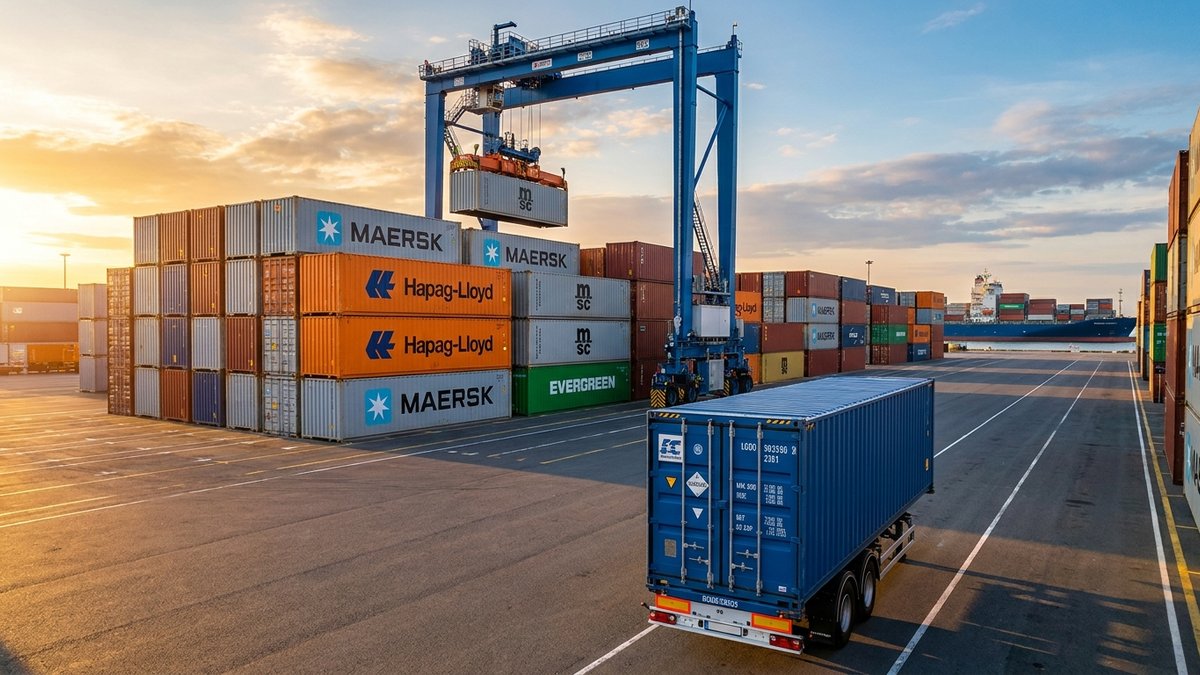
The containers have cleared customs in Burgas. The documentation is in order, the weight matches and the CE marking is valid. The final stage is next: inland transport to the construction site. But before the trucks depart, a question many procurement teams leave until the last minute appears: does the insurance cover the entire route? And if something happens 200 km from the port, who pays?
What You Are Really Dealing With
Cargo Insurance Is Not Universal
Marine cargo insurance for BESS shipments is structured around the Institute Cargo Clauses (ICC) issued by the Lloyd's Market Association. The three principal forms – ICC(A), ICC(B) and ICC(C) – provide different levels of cover:
- ICC(A) – “all risks” cover: covers physical loss or damage unless specifically excluded.
- ICC(B) – wider than ICC(C): includes additional marine risks such as earthquake, lightning, washing overboard and entry of sea water.
- ICC(C) – minimum cover: fire, explosion, sinking, stranding, collision, discharge at a port of distress and sacrifice in general average.
Under Incoterms 2020, the source states that under CIF the seller must arrange insurance at ICC(A) level. Under FOB, the buyer arranges its own insurance from the point the cargo is loaded on board; unlike CIF, FOB does not impose a contractual insurance obligation on the seller.
What the ICC Clauses Cover for BESS
All ICC clause sets referenced in the source include General Average cover. General Average is a maritime-law principle under which cargo interests share proportionally in losses or expenses deliberately incurred to save the vessel and cargo. After a fire or grounding, even intact BESS containers can be subject to a contribution.
Without cargo insurance, cargo release following General Average can require a guarantee or deposit, often 10–25% of cargo value. On a 40-container project worth €15 million, that could mean €1.5–3.75 million tied up while the final contribution is calculated.
Key Exclusions for BESS Cargo
Inherent Vice is a critical exclusion for lithium-ion batteries. Thermal runaway – a self-accelerating reaction inside a cell that causes rapid temperature rise – may be argued by an insurer to be an inherent characteristic of the cargo. For BESS, the source recommends expressly negotiating thermal-runaway cover when the policy is placed. Without such wording, a thermal-runaway claim may be disputed.
The Delay exclusion in cargo clauses relates to physical damage arising from delay, such as battery degradation during prolonged storage. It does not cover financial losses caused by late project completion. Those financial losses require a separate DSU (Delay in Start-Up) or MDSU (Marine Delay in Start-Up) policy.
The insufficient-packing exclusion reflects the insured's basic duty to protect the cargo. It is not simply a coverage gap that can always be bought back with additional premium. Repacking during transit after cover has attached may be treated differently.
Insured Value: the Right Approach
For an FOB invoice, the source recommends declaring separately:
- FOB invoice value
- Freight
- A 15–20% uplift for anticipated profit, customs-related costs and destination expenses
If the insured amount is described as a “CIF value” while the actual commercial invoice is FOB, the insurer may settle against the actual underlying FOB value. Under-declaring value can result in proportionately lower indemnity.
The Timeline
A marine cargo policy does not simply expire because a vessel is late. It has an inception point and remains in force through the insured transit, including inland legs where the policy wording provides for them. A delayed sailing does not by itself invalidate the policy.
| Stage | Timing | Critical action |
|---|---|---|
| Before transport booking | 4–6 weeks | Review Incoterms and establish who insures |
| Before loading | 2–3 weeks | Issue insurance certificate |
| After an incident | 24–48 hours | Notify insurer |
| General Average | Immediately | Contact insurer for guarantee |
The most common mistake is assuming that “insurance is arranged” without checking exactly what the policy covers and whether it continues all the way to the construction site.
The Documents
Documents Needed for Insurance Purposes
| Document | Prepared by | Purpose |
|---|---|---|
| Insurance certificate | Insurer or broker | Evidence of cover |
| Commercial Invoice | Manufacturer | Determines insured value |
| Packing List | Manufacturer | Cargo description |
| Bill of Lading | Carrier or contractual freight forwarder | Evidence of carriage |
| MSDS/SDS | Manufacturer | Carrier requirement at loading |
| UN38.3 Test Summary | Manufacturer | Transport compliance |
Important: the source treats MSDS/SDS as a carrier requirement at loading rather than a routine customs requirement. It notes that customs rarely requests an MSDS for BESS where the battery HS classification is clear.
For a Claim
After an insured event, the source lists:
- Photos of the damage, taken within 24 hours
- Copy of the Bill of Lading
- Commercial Invoice
- Packing List
- Damage Report from the carrier
- Correspondence with the carrier
What Goes Wrong
Scenario 1: Unchecked Cover under FOB
What happens: the project team assumes the manufacturer arranged insurance because the invoice says “FOB Shanghai”. Under FOB, however, the buyer arranges its own insurance from the point of loading. The manufacturer has no contractual obligation to insure the sea transit.
Why: misunderstanding of Incoterms.
Consequences: if an incident occurs at sea, the cargo may be uninsured and the loss sits with the buyer.
Prevention: under FOB, arrange cargo insurance before loading and have the insurance certificate available before sailing.
Scenario 2: General Average without Insurance
What happens: a vessel carrying BESS containers suffers an engine-room fire and the shipowner declares General Average. All cargo owners, including those whose containers are undamaged, must provide security before cargo release.
Why: General Average is a maritime-law principle, not an insurance product.
Consequences: without insurance, the cargo owner may need to post a deposit often equal to 10–25% of cargo value. For a BESS project, that can tie up millions of euros for years.
Prevention: ICC(A), ICC(B) and ICC(C) cargo policies include General Average cover. The insurer can issue security on behalf of the insured, enabling release of the cargo.
Scenario 3: Thermal Runaway Treated as Inherent Vice
What happens: during sea transport, one BESS container suffers thermal runaway. The insurer rejects the claim on the basis that thermal runaway is an inherent vice of lithium-ion batteries.
Why: inherent vice is a standard exclusion. Without explicit negotiated wording for thermal runaway, a claim may be declined.
Protection on paper means nothing when salt water meets silicon.
Consequences: total loss of a container, typically €350,000–€500,000 in the source, without insurance recovery.
Prevention: expressly negotiate thermal-runaway cover when the policy is placed and use a broker experienced with BESS projects.
Scenario 4: Delay Losses without DSU Cover
What happens: damage to a critical component during transport delays commissioning by three months. Cargo insurance pays for the physical damage but not lost project revenue.
Why: cargo insurance covers physical loss or damage. Financial delay losses require DSU or MDSU cover.
Consequences: physical damage is covered, but three months of lost revenue are not. At €500,000 expected revenue per month in the source example, that is €1.5 million of uninsured loss.
Prevention: for projects with fixed grid-connection deadlines, assess DSU cover separately from cargo insurance.
Scenario 5: PCS and Batteries on One Policy at the Wrong Rate
What happens: the project insures PCS units and battery containers under one policy, and the insurer applies the higher Dangerous Goods rate to the entire value.
Why: PCS units are not themselves Class 9 dangerous goods, while the batteries are. Combining values without differentiation can increase premium.
Consequences: higher premium than necessary.
Prevention: if PCS and batteries travel on different vessels, separate policies may reduce premium. If they travel together, one policy can still be appropriate, but values should be clearly separated.
What This Means for Your Project
- Check Incoterms before signing. Under FOB, insurance is the buyer's responsibility. Do not assume the manufacturer arranged it.
- Request explicit thermal-runaway cover. Standard ICC clauses can leave room for an inherent-vice exclusion.
- Declare insured value correctly. For an FOB invoice, identify FOB value, freight and a 15–20% uplift as separate components.
- Assess whether DSU cover is needed. On projects with fixed grid-connection dates, financial delay losses can exceed the cost of physical damage.
- Work with an insurance broker who understands BESS cargo and can structure the wording appropriately.
What to Remember
- Cargo insurance covers physical loss or damage, not project-delay revenue losses. DSU/MDSU is a separate cover.
- All ICC clause levels referenced in the source include General Average cover. Without insurance, General Average security can tie up substantial cash.
- Thermal runaway may be disputed under an inherent-vice exclusion unless the policy wording addresses it explicitly.
- Under FOB, the buyer arranges insurance.
- A marine cargo policy follows the insured transit; a delayed sailing does not automatically terminate cover.
Frequently Asked Questions
Q: What is the difference between ICC(A), ICC(B) and ICC(C) for BESS shipments?
A: ICC(A) provides the broadest “all risks” form subject to exclusions. ICC(C) is the minimum named-perils cover. ICC(B) sits between them and includes additional marine perils.
Q: Does cargo insurance automatically cover thermal runaway?
A: Not necessarily. The source warns that thermal runaway may be argued as inherent vice, so explicit wording should be negotiated for BESS policies.
Q: What is General Average and why does it matter?
A: General Average requires cargo interests to contribute to extraordinary sacrifices or expenses made to save the maritime adventure. Without insurance, cargo release may require a substantial cash guarantee.
Q: Who is responsible for insurance under FOB?
A: The buyer. Under FOB, the seller does not have a contractual obligation to insure the cargo during the sea voyage.
Q: Does cargo insurance cover financial losses from project delay?
A: No. Those losses require separate DSU or MDSU coverage.
Q: What should the insured amount include for an FOB shipment?
A: The source recommends FOB invoice value plus freight plus a 15–20% uplift, shown as separate elements.
Q: Does the marine cargo policy expire if the vessel sails late?
A: No. A delayed sailing does not by itself invalidate a policy that is written to cover the insured transit.