

Modal Shift for BESS Logistics: When Rail and Sea Actually Reduce Your Carbon Footprint
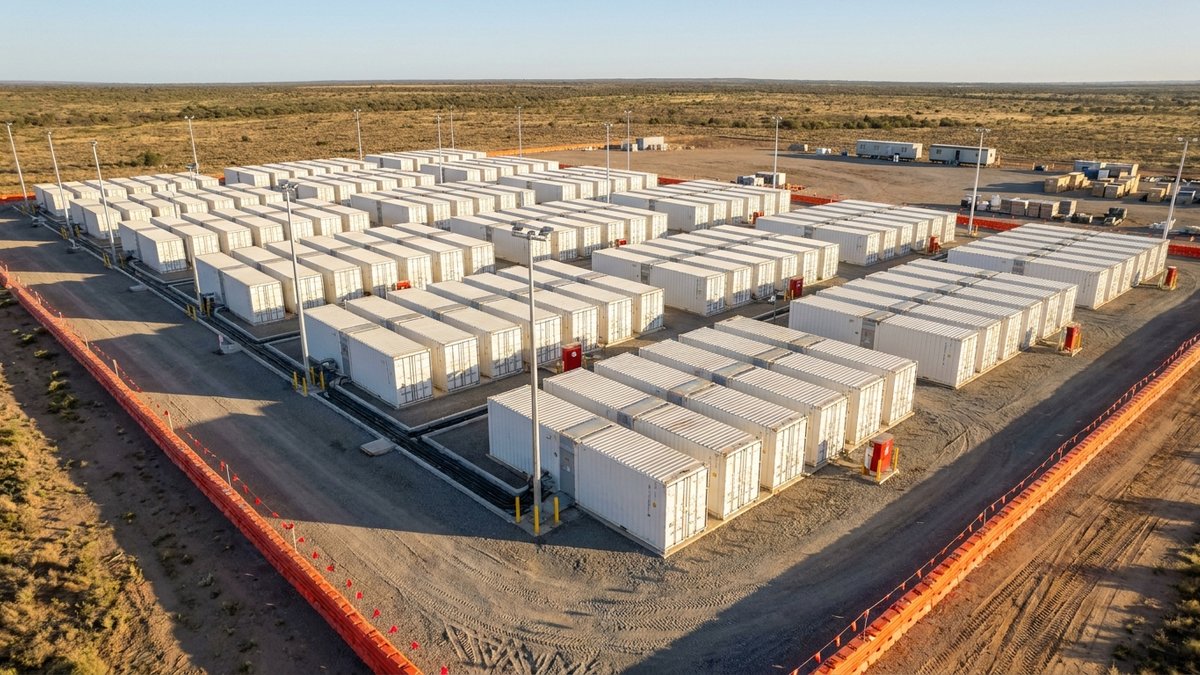
A 43-tonne BESS container moved 400 km inland by diesel truck produces far more transport emissions than the same load moved by electrified rail. In the source's example, the shift cuts the inland-leg footprint by about 87%. Across 40 containers, that becomes a material Scope 3 reduction rather than a statistical footnote.
Series
Green Corridor: ESG and Sustainability in BESS Logistics
- Ep. 1 · Carbon Map
- Current episode: Ep. 2 · Modal Shift
- Ep. 3 · Carbon Accounting
- Ep. 4 · Reverse Logistics
The Carbon Reality
BESS projects in CEE face a paradox: equipment designed to store renewable energy arrives with a transport footprint of its own. For EPC companies with ESG commitments and investors asking for Scope 3 reporting under the GHG Protocol, the question is no longer whether logistics emissions should be measured, but how they can be reduced.
The EU Battery Regulation 2023/1542 introduces carbon-footprint requirements for industrial batteries. Transport is part of the broader life-cycle conversation, and modal shift from road to rail is one of the few logistics levers a project team can directly control.
The Numbers
Freight-transport emission factors vary materially by mode, fuel and electricity mix. Using GLEC Framework v3.2 assumptions aligned with ISO 14083:2023, the source gives representative values:
Road transport, full-load diesel truck:
- 55–62 g CO₂e/tkm well-to-wheel.
- Heavy cargo such as 43-tonne BESS containers performs better per tonne-kilometre than lighter loads, but absolute emissions remain high.
Electrified rail:
- About 7 g CO₂e/tkm using the average European electricity mix in the source.
- 0.3–0.5 g CO₂e/tkm where rail runs on 100% renewable electricity in the source examples.
- 15–20 g CO₂e/tkm for diesel traction.
Sea transport:
- 8–15 g CO₂e/tkm depending on vessel size and utilisation.
Practical conclusion: replacing road with electrified rail for the inland stage can reduce emissions by around 85–90% under the article's assumptions. For 40 containers and 400 km inland, the difference is roughly 35–40 tonnes CO₂e.
The calculation follows GLEC Framework v3.2, aligned with ISO 14083:2023 and compatible with GHG Protocol logistics reporting.
The Regulatory Framework
Three frameworks shape how BESS transport emissions are measured and reported:
ISO 14083:2023 provides a standard for quantifying and reporting greenhouse-gas emissions from transport-chain operations. GLEC Framework v3.2 is the practical industry methodology used in the article.
GHG Protocol Scope 3 Category 4 covers upstream transportation and distribution. For an EPC company importing BESS, sea and inland transport from factory to site belong in the relevant upstream logistics inventory.
The EU Battery Regulation introduces carbon-footprint requirements for industrial batteries; project teams should keep product-footprint and logistics-footprint boundaries clear.
The Practical Approach
Modal shift for BESS in CEE is not only theoretical. The article cites a December 2025 operation in Wilhelmshaven where heavy BESS containers were transferred directly from vessel to rail for onward delivery toward Budapest, demonstrating the practical viability of intermodal transport for super-heavy battery cargo.
Step 1: Assess the Route
Not every route is suitable for modal shift. Assessment criteria include:
- Distance from port to site: rail becomes more attractive above roughly 300 km in the article's planning framework.
- Availability of an intermodal terminal near the destination.
- Terminal capacity to handle 43–48 tonne containers.
- Train frequency; weekly departures are common on many CEE corridors.
Step 2: Calculate Emissions
For Scope 3 reporting, the article uses:
Emissions (kg CO₂e) = Distance (km) × Weight (t) × Emission factor (g CO₂e/tkm) / 1000
Using its GLEC factors:
- Diesel truck: 400 km × 43 t × 55 g/tkm = 946 kg CO₂e per container.
- Electrified rail, EU mix: 400 km × 43 t × 7 g/tkm = 120 kg CO₂e per container.
Difference: 826 kg CO₂e per container, or about 87% lower.
Step 3: Document It for ESG Reporting
To make the modal shift auditable, retain:
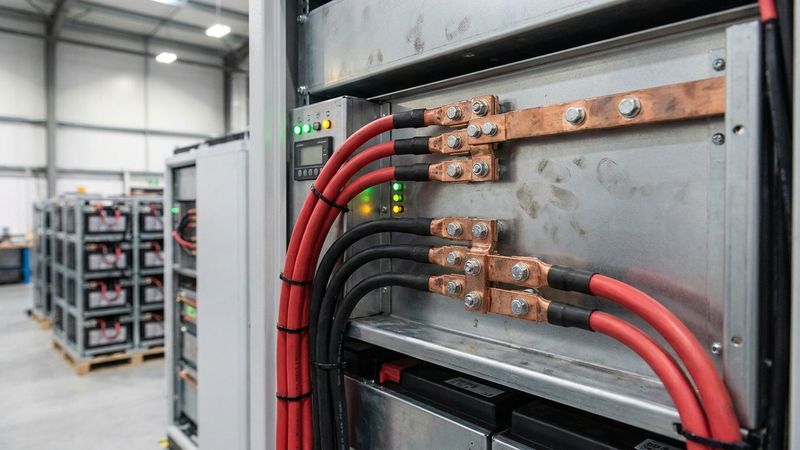
Every connection point represents a logistics decision that shapes carbon performance.
- A document from the logistics provider confirming the transport mode used.
- An emission factor with a stated source such as GLEC, EcoTransIT or carrier-specific data.
- A calculation of avoided emissions against the road-only baseline.
The Greenwashing Trap
Modal shift is a real emissions-reduction tool, but several common claims weaken credibility:
“Zero-emission rail” is misleading unless the electricity itself is genuinely zero-carbon. Even electrified rail carries generation-related emissions unless backed by an appropriate renewable-energy source and accounting treatment.
Ignoring first and last mile is another common error. If a container travels 350 km by rail but 50 km by truck to the site, those road emissions still belong in the calculation.
Using outdated factors can distort the result because electricity mixes change each year. Use current factors and document the source.
Unverified “green logistics” claims are not enough for audit. The underlying carbon calculation needs evidence and methodology.
What This Means for Your Project
- Include intermodal routing in the logistics RFQ. Ask for sea + rail + road alongside sea + road, and compare both cost and emissions.
- Request emissions data under GLEC / ISO 14083.
- Check infrastructure limits: not every CEE intermodal terminal can handle 43–48 tonne containers.
- Document the road-only baseline so avoided emissions can be calculated consistently.
- Allow extra schedule time. Intermodal transport can add several days compared with direct road delivery.
What to Remember
- Under the article's assumptions, electrified rail cuts the inland BESS delivery footprint by about 85–90% versus diesel road transport.
- GLEC Framework v3.2 and ISO 14083:2023 are the reference calculation frameworks used.
- The route and electricity mix matter; rail is not automatically zero-emission.
- Intermodal BESS transport is operationally possible in CEE but requires terminal-capacity checks and more schedule planning.
- Claims need verifiable data to avoid greenwashing risk.
Frequently Asked Questions
Q: How much CO₂e can modal shift save for one BESS container?
A: In the source's 43-tonne, 400 km example, moving from diesel truck to electrified rail saves around 826 kg CO₂e per container, about 87%.
Q: Which framework should I use?
A: The article uses GLEC Framework v3.2 aligned with ISO 14083:2023.
Q: Which Scope 3 category covers BESS transport?
A: Upstream transport organised for purchased goods is generally captured in Scope 3 Category 4, subject to the company's accounting boundary and contract structure.
Q: When does the battery carbon-footprint declaration become relevant?
A: The source discusses the EU Battery Regulation timeline for industrial batteries above 2 kWh and stresses keeping the product footprint separate from transport emissions.
Q: When does rail become practical?
A: The source uses roughly 300 km as a planning threshold where rail can become economically and environmentally attractive, depending on terminal access and first/last-mile requirements.
Q: How should modal shift be documented for ESG reporting?
A: Retain proof of mode, the emission-factor source and the calculation against a defined baseline.
Q: Can every CEE terminal handle 43-tonne BESS containers?
A: No. Terminal lifting and weight limits must be verified before committing to an intermodal route.