

Plan B: When the Primary Timeline Fails

Series
Clockwork: Managing Risk in BESS Delivery Schedules
- Ep. 1 · The Critical Path - The 14 Decisive Weeks
- Current episode: Ep. 2 · Plan B - When the Schedule Falls Apart
- Ep. 3 · 82 Projects - The Capacity Collision
The Clock Problem
Every BESS project schedule contains a hidden vulnerability: the assumption that everything will happen according to plan. The 2026 reality is different. The source notes container-shipping schedule reliability falling to 13.9% on-time deliveries in 2025 from 36% in 2024, while 47.4% of shipments arrived more than three days late.
For projects targeting the RESTORE 2 deadline of 31 July 2026, that means “Plan A” rarely survives contact with reality.
This episode addresses the question many project managers avoid: what happens when the critical path breaks down – and how do you build a contingency plan that actually works?
The Numbers
Probability of Schedule Deviation
| Stage | Planned time | Realistic range | Delay risk |
|---|---|---|---|
| Sea transport, China → Burgas/Constanța | 28–35 days, direct Suez | 55–70 days, COGH + feeder from a transshipment hub | Source notes 85%+ choosing COGH routing |
| Transshipment in Piraeus/Istanbul | 3–5 days | Up to 2–3 weeks in Q3–Q4 peak season | High in Q3–Q4 |
| Customs clearance | 1–3 working days | Up to 10 working days when problems occur | 15–20% of shipments in the source |
| Inland transport to site | 1–2 weeks | 2–3 weeks on complex routes | Depends on permits |
Critical Buffers for RESTORE 2 Projects
For a project targeting grid connection on 31 July 2026:
- Minimum sea-transport buffer: +21 days, reflecting the difference between direct Suez and COGH routing.
- Transshipment buffer: +14 days for peak-season Piraeus.
- Customs buffer: +7 working days.
- Inland-transport buffer: +7 days.
Total recommended buffer: 6–7 weeks above the “ideal” schedule.
The Planning Framework
Step 1: Identify Failure Points
Before building a contingency plan, map the points where the schedule most often breaks:
Point 1: Sailing from origin
- Trigger: missed sailing because of manufacturer delay or a documentation problem.
- Impact: +7–14 days for the next weekly sailing, or +30 days for the next monthly direct service.
Point 2: Transshipment port
- Trigger: missed feeder connection in Piraeus or Istanbul.
- Impact: +7 days for the next weekly feeder, up to +21 days in peak season.
Point 3: Customs clearance
- Trigger: documentation mismatch in weight, HS code or certificates.
- Impact: +3–7 working days for correction.
Point 4: Oversized-load permits
- Trigger: carrier files the permit application too late.
- Impact: +6–12 working days.
Step 2: Build Contingency Scenarios
For each failure point define:
- A trigger indicator – how you know something is going wrong.
- Immediate action – what happens in the first 24–48 hours.
- A fallback option – the alternative path.
- The impact on cost and time.
Step 3: Plan Backward from the Deadline
For RESTORE 2, 31 July 2026:
| Stage | Latest date | Comment |
|---|---|---|
| Grid connection | 31 July 2026 | Hard deadline |
| Commissioning | 15 July 2026 | Two weeks for testing |
| Delivery to site | 1 July 2026 | Two weeks for installation |
| Customs clearance and road transport | 15 June 2026 | Two-week buffer |
| Arrival in Burgas/Constanța | 1 June 2026 | Two weeks for customs and inland transport |
| Sailing from China | 1 April 2026 | 60-day COGH transit |
| Manufacturer ready | 15 March 2026 | Two weeks for loading |
Conclusion: for a 31 July 2026 deadline, the shipment should have sailed from China no later than early April. At the source's 17 April reference point, the margin for error was effectively zero.
The Scenarios
Scenario 1: Missed Sailing at Origin
Trigger: five days before planned sailing, the manufacturer says the containers will not be ready.
Immediate action:
- Confirm a realistic new ready date.
- Check the next available weekly feeder-based and monthly direct sailings.
- Assess the impact on the final deadline.
Fallback:
- If the delay is 7–10 days, book the next weekly sailing via Piraeus/Istanbul.
- If the delay is 14+ days, assess a direct Suez service, which is less frequent but faster.
- If the delay is critical, consider air freight for critical non-battery components needed for connection.
Impact: +7–14 days, plus express handling and potentially a more expensive route.
Scenario 2: Transshipment Delay in Piraeus
Trigger: the containers arrive in Piraeus but miss the feeder to Burgas.
Immediate action:
- Confirm the next feeder, normally weekly.
- Notify the customs broker of the revised ETA.
Fallback:
- Wait for the next weekly feeder, +7 days.
- For a critical schedule, examine road transport from Piraeus to Burgas, around 800 km and 2–3 days, but only with the necessary ADR documents, urgent oversized-load permits, truck availability and carrier agreement to terminate the sea leg in Piraeus.
Impact: +7–14 days. The road option is substantially more expensive but may rescue the schedule.
Scenario 3: Customs Documentation Problem
Trigger: Burgas customs holds processing because Packing List weight does not match the VGM weight shown in the Bill of Lading.
Immediate action:
- Identify the exact mismatch.
- Contact the manufacturer for a corrected Packing List.
- Prepare an explanatory letter for customs.
Fallback:
- Correct the documents, 3–5 working days.
- If needed, physical inspection and re-weighing, adding another 2–3 days.
Impact: +3–10 working days, while storage charges may accumulate from discharge.
Scenario 4: Oversized-Load Permits Are Late
Trigger: the carrier did not start the permit process in time; the containers are at the terminal but cannot move.
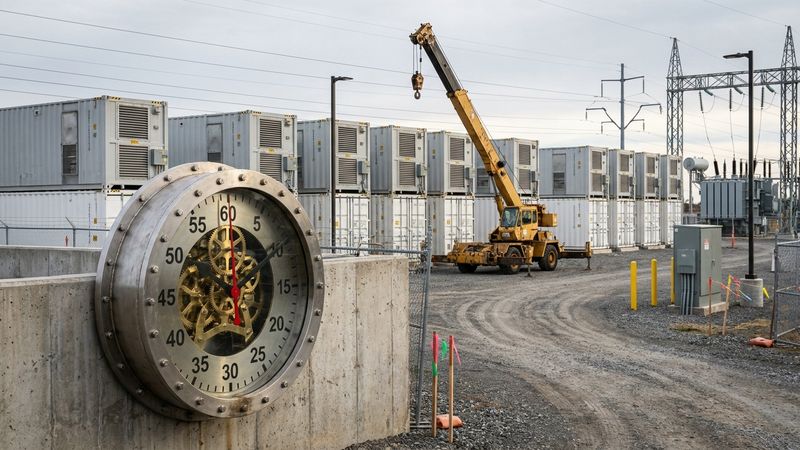
Precision without flexibility becomes the enemy of progress under pressure.
Immediate action:
- Confirm application status.
- Escalate with the carrier for faster processing.
- Assess alternative routes and carriers where available.
Fallback:
- Wait for permits, typically 6–8 working days for one country.
- Use an alternative route if available.
- Use temporary terminal storage.
Impact: +6–12 working days while storage charges continue.
Mistakes Project Managers Make
Mistake 1: Planning with the “Ideal” Transit Scenario
Many PMs use 35 days via direct Suez as the base case without confirming which service the manufacturer will use. The source notes that most suppliers choose COGH routing for regularity and lower cost, making 55–70 days a more realistic base case.
Consequence: the project appears “on schedule” until the shipment arrives 3–4 weeks later than expected.
Mistake 2: Treating Buffers as Spare Time to Spend
Buffers exist to absorb unavoidable variance. When an early stage finishes on time, some teams reallocate that buffer elsewhere.
Consequence: when a later delay occurs, there is no buffer left and the final deadline is threatened.
Mistake 3: Failing to Notify the Carrier about Permits Early Enough
The carrier arranges oversized-load permits, but the process should begin 7–8 working days before planned delivery. Many teams assume this happens automatically.
Consequence: containers are at the terminal and trucks are available, but permits are not ready. Every day adds storage cost.
What This Means for Your Project
- Recalculate using realistic transit times. If the plan assumes 35 days, test it at 65. If the deadline still works, good. If not, it is better to know now.
- Identify failure points and define contingencies. Each critical point – sailing, transshipment, customs and permits – should have a documented fallback with named actions and owners.
- Establish early warning indicators. Weekly manufacturer status, vessel tracking and regular communication with the customs broker are the minimum.
- Reserve permit capacity early. Tell the carrier at least two weeks before expected terminal arrival, not on discharge day.
- Keep all parties aligned. Manufacturer, freight forwarder, carrier, customs broker and road haulier should know the current status and expected dates.
What to Remember
- 65 days, not 35: use a realistic COGH + feeder transit time unless a suitable direct Suez service is confirmed.
- 6–7 weeks of buffer: for a hard-deadline project such as RESTORE 2, the source recommends this above the “ideal” schedule.
- Documented contingency plans: every failure point should have a written fallback.
- Permits: trigger the process 7–8 working days in advance.
- Early indicators beat reactive fixes: proactive communication prevents more delays than even the best contingency plan can recover.
Frequently Asked Questions
Q: What is a realistic transit time from China to Burgas in 2026?
A: The source gives 55–70 days for COGH routing, which most carriers choose for regularity, and 30–35 days for less frequent direct Suez services.
Q: How much customs buffer should I allow in Bulgaria?
A: Up to three working days with perfect documentation and up to 10 when there are documentation problems.
Q: Who arranges oversized-load permits?
A: The transport company/carrier. The project team should make sure the process starts at least 7–8 working days before planned delivery.
Q: What happens if I miss the feeder in Piraeus?
A: A missed weekly feeder generally adds about seven days. In peak season, Piraeus congestion can add 2–3 weeks.
Q: Can road transport from Piraeus to Burgas be used as a fallback?
A: Yes in principle, but it requires carrier agreement, customs-transit changes, ADR-compliant trucking and oversized-load permits. The organisation time can remove much of the apparent time saving.
Q: What most often causes customs-document problems?
A: A mismatch between Packing List weight and VGM/Bill of Lading weight. Align the Packing List to actual VGM before the B/L is issued.
Q: What is the typical port-to-site lead time?
A: Around 1–2 weeks in a standard case and 2–3 weeks for complex routes, including customs, permits and physical delivery.