

Hold or Flow: The Customs Warehouse Decision That Shapes BESS Project Cash Flow
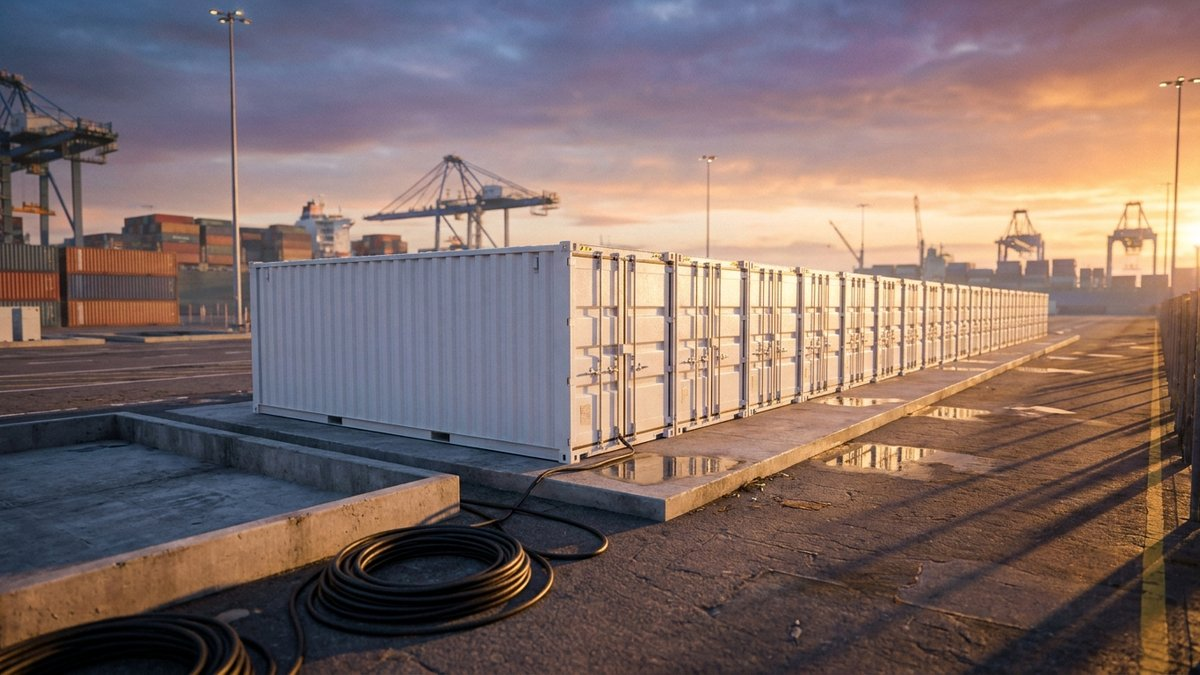
A shipment of 50 BESS containers arrives in Burgas. The procurement team has two choices: clear the cargo immediately and move it toward the site, or place it in a customs warehouse and defer duty and VAT until the construction programme actually needs the units. The first route is simpler. The second can preserve substantial working capital for weeks or months. Both have costs that become visible only after the decision has already been made: storage charges, administration and reduced operational flexibility.
Series
The Buyer's Desk: Commercial Decisions That Define the BESS Project
- Ep. 1 · Payment Terms
- Ep. 2 · Who Pays for the Delay
- Ep. 3 · Importer of Record
- Ep. 4 · Spare Parts
- Current episode: Ep. 5 · Storage or Flow - The Customs Buffer
The Decision on the Table
The containers are on the quay in Burgas and the site will be ready in three weeks. Do you pay duty and VAT now and release the cargo immediately, or move it into a bonded warehouse and defer the taxes until the batteries are actually required? This is primarily a working-capital decision about inventory positioning, not just a logistics decision.
The Options
Option A: Direct Clearance and Just-in-Time Delivery
The customs broker files a standard import declaration. Duty and VAT become payable immediately, and the containers leave the port for the site or a commercial warehouse.
The buyer ties up cash at clearance. Duty is not recoverable. VAT may be recoverable, but recovery takes time, so capital remains blocked while the batteries may still be waiting for the construction programme.
Option B: Bonded Warehousing with Deferred Duty and VAT
The containers are placed under customs warehousing under the Union Customs Code. Duty and VAT are suspended until the goods are released for free circulation.
This keeps working capital available and allows staged release as the site becomes ready. The trade-off is warehouse cost and additional customs administration.
The Hidden Obligation
Tax Deferral Is Not Free Storage
Bonded warehousing delays duty and VAT but does not eliminate storage charges. Heavy BESS containers can cost more to store because the facility needs suitable handling equipment, floor capacity and safety controls.
The benefit therefore depends on the cost of capital. Where funding is expensive or constrained, deferring tax for several weeks can be valuable. Where capital is cheap, storage may erase much of the benefit.
Not Every Warehouse Can Handle BESS
The selected facility needs all of the following:
- Valid customs-warehousing authorisation.
- Capacity for 35–45 tonne containers and appropriate lifting equipment.
- Permission and safety arrangements for Class 9 dangerous goods.
Geography Matters
For a Bulgarian project entering through Burgas, a nearby bonded warehouse is intuitive. For cargo entering through Constanța, the project has to choose between warehousing/clearing in Romania or moving under T1 transit into Bulgaria.
Clearing in another Member State can create VAT-registration or fiscal-representation issues. Moving under T1 adds another transport/customs leg but may simplify the importer's tax structure.
Staged Release Requires Planning
For 30–50 containers arriving in several waves, customs warehousing allows partial release. But each batch needs the correct commercial and packing documentation. If the manufacturer issued one invoice for the entire shipment, splitting it later can take time and delay release.
Storage Is Not Indefinite
The UCC does not impose a single fixed maximum warehousing period, but customs authorities can impose conditions and question unusually long inactivity. BESS projects normally need the cargo within weeks rather than years, yet financing or permitting delays can still create prolonged storage.
What It Costs When Things Go Wrong
Scenario: Site Not Ready after Direct Clearance
The project clears the cargo because the site is “almost ready”. Duty and VAT are paid. Two weeks later, transformer delivery slips by another three weeks. The containers sit in a commercial warehouse while storage costs run and working capital remains tied up.
Scenario: No Suitable Bonded Class 9 Facility Nearby
The containers remain at the port terminal while the team searches for a bonded warehouse capable of handling heavy Class 9 cargo. Terminal storage charges continue.
Scenario: Batch Documentation Was Not Prepared
The team plans staged release but the manufacturer issued a single invoice for all 45 containers. The customs broker needs documents identifying the 15 units in the first batch. Reissuing or splitting the documents delays release while the site waits.
What to Arrange before Booking
- Confirm site-readiness timing to the nearest week.
- Identify bonded facilities near the entry port that accept Class 9 cargo.
- Verify heavy-container handling capacity.
- Compare storage charges with the working-capital benefit of deferred duty and VAT.
In the Supplier Contract
- Require invoices that can support staged releases if that is the planned model.
- Make sure the Packing List identifies containers individually by serial/container number.
With the Customs Broker
- Agree the customs procedure before arrival: direct clearance or bonded warehousing.
- For bonded storage, verify the facility's authorisation and dangerous-goods capability.
- Agree the process for separate declarations for staged release.
What to Remember
- Bonded warehousing defers duty and VAT; it does not remove storage cost.
- Not every warehouse can legally or physically handle heavy Class 9 BESS containers.
- Staged release needs batch-level invoices and packing data.
- Clearing through another EU country can create EORI, VAT and fiscal-representation consequences.
- The customs procedure is effectively locked once declarations are filed, so decide before arrival rather than after.
Frequently Asked Questions
Q: What is a bonded warehouse?
A: A customs-authorised facility where non-Union goods can be stored with import duty and VAT suspended until release for free circulation.
Q: What duty does the source use for BESS batteries?
A: It uses 2.7% ad valorem for lithium-ion batteries under HS 8507.60.00.90, with VAT added according to the country of clearance.
Q: Can any bonded warehouse store BESS containers?
A: No. It must have the right customs authorisation, dangerous-goods capability and equipment/capacity for 35–45 tonne containers.
Q: What happens if I already paid duty but the site is not ready?
A: Duty remains paid, VAT recovery follows the normal tax process and the cargo incurs commercial-storage charges while waiting.
Q: How does staged release work?
A: Each batch is released under its own customs declaration using commercial and packing documents that identify the relevant containers.
Q: If the cargo lands in Constanța for a Bulgarian project, where should I clear it?
A: It depends on tax registration and project structure. Clearing in Romania may require local VAT/fiscal arrangements; T1 transit to Bulgaria adds a transport leg but can simplify tax handling.