

Who Pays for the Slip
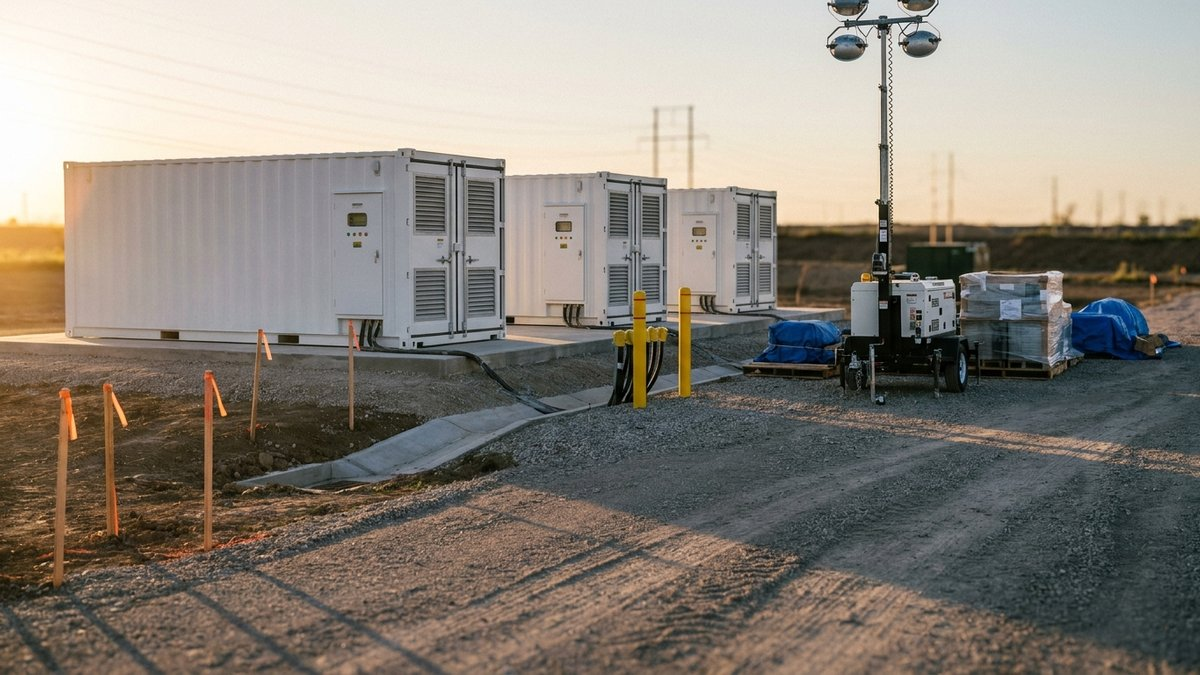
The vessel arrives on schedule. The containers clear customs without delay. The trucks deliver the equipment to site on the agreed day. And the project can still miss the subsidy deadline, because between “delivered” and “commercially operational” sit weeks of work that the supply agreement may not cover. Who pays for that delay is decided at signature, in clauses that are often read last.
Series
The Buyer's Desk: Commercial Decisions That Define the BESS Project
- Ep. 1 · Payment Terms - Who Controls the Cargo
- Current episode: Ep. 2 · Who Pays for the Delay - Deadlines and Penalties
- Ep. 3 · Landed, Not Loaded - Who Is the Importer
- Ep. 4 · Spare Parts - Warranty and Returns
- Ep. 5 · Storage or Flow - The Customs Buffer
The Decision on the Table
A BESS supply agreement contains a clause that deserves more attention than it usually receives: the definition of the delivery deadline and the mechanism for delay damages. Once signed, that clause determines who carries the financial burden if the project misses grid connection or a subsidy deadline.
The Main Risk-Allocation Tools
Liquidated Damages under the Supply Agreement
The supply contract can set liquidated damages for delay against an agreed milestone. They usually accrue per day and are capped at a percentage of contract value. If equipment arrives late, the supplier pays the agreed amount until the cap is reached.
The critical question is what “delivery” means. Incoterms define the point at which risk transfers, not necessarily arrival at site or readiness for commissioning. Under FOB, risk transfers at loading. Under CIF, the seller pays freight and insurance to destination, but risk still passes at shipment.
Delay in Start-Up / Marine DSU Insurance
DSU, also called Advanced Loss of Profits, can cover financial loss from delayed start-up when the delay follows an insured physical event. If a transformer is physically damaged during transit and the project starts late, DSU may respond. If the delay is caused only by customs paperwork, a late carrier or missing documentation, ordinary DSU may not respond.
Marine DSU extends the concept to the marine leg but still depends on the policy wording and the insured trigger.
The Hidden Obligation
The most common contractual mistake is confusing three moments: “delivered”, “arrived at site” and “commercially operational”. These can be separated by weeks or months, with completely different contractual consequences.
“Delivered” under Incoterms Does Not Mean “At Site”
Under FOB Shanghai, delivery for risk-transfer purposes occurs when the containers are loaded on board. A three-week delay in Piraeus or a customs hold in Burgas may therefore sit outside the supplier's delivery-LD obligation unless the contract defines a different commercial milestone.
Even under destination terms, arrival at the quay is not the same thing as readiness to energise the system.
The Gap between Arrival and COD
Between discharge at Burgas and Commercial Operation Date can sit:
- Customs clearance: 1–3 working days with perfect documents, up to 10 with problems.
- Inland transport: typically 1–2 weeks, longer on complex routes.
- Unloading and positioning.
- Electrical connection and PCS integration.
- Acceptance testing and commissioning.
- Grid-connection approval.
Any of these can consume the remaining project float, while the equipment supplier may already have completed its contractual delivery obligation.
Liquidated Damages Have a Cap
The source describes typical delay-LD caps of roughly 5–15% of contract value. Once the cap is reached, damages stop accruing unless the contract provides another remedy. A lost subsidy or missed revenue window can be much larger than the LD cap.
DSU Does Not Cover Every Delay
DSU is not a blanket policy for any schedule slip. It normally responds to delay caused by insured physical loss or damage, subject to policy terms, waiting periods and exclusions. Pure logistics delay without physical damage can remain with the project owner.
Who Owns the “Dead Zone”?
Between contractual delivery and COD there can be a period where the buyer carries the schedule risk but has no matching remedy against supplier, carrier or insurer. That dead zone is where subsidy deadlines can be lost.
What It Costs When Things Go Wrong
The source models a Bulgarian RESTORE 2 project with a 31 July 2026 COD deadline. The supplier ships on time under FOB Shanghai on 15 April. The vessel takes a COGH route and reaches Piraeus in mid-June, then Burgas after the next feeder. Customs takes five working days because Packing List and VGM weights differ. Heavy-haul permits add another eight days.
The equipment reaches site on 11 July, leaving only 20 days. Electrical connection, PCS integration, acceptance testing and grid approval need at least four weeks. The project misses the deadline even though the supplier met its contractual shipping date.
No supplier LD is payable because the supplier performed. No ordinary DSU trigger exists because there was no insured physical damage. The commercial loss stays with the buyer.
What to Agree before Signing
In the Supply Agreement
- Define the commercial delivery milestone carefully. If the project needs destination arrival, do not rely only on an FOB loading date.
- Build a meaningful buffer between contractual delivery and COD; the source recommends at least eight weeks for CEE projects.
- Define what happens after the LD cap is reached, including termination or other remedies where appropriate.
- Require critical transport documentation before loading.
In the Logistics Contract
- Require a realistic end-to-end schedule including sea freight, transshipment, feeder, customs and inland delivery.
- Allocate responsibility for oversized-load permits and define how early the process starts.
- Agree an early-warning process for delay at each milestone.
In the Insurance Programme
- Check whether DSU covers lost subsidy, lost revenue, or only specific insured consequences.
- Understand the time excess / waiting period before cover responds.
- Set the insured value to the real project exposure.
Before Booking
- Plan backward from COD and quantify every post-port stage.
- If the remaining buffer is below eight weeks, revisit route, schedule or commercial structure.
- Document assumptions and get all parties aligned in writing.
What to Remember
- Incoterms define risk transfer, not project commissioning.
- Supply-agreement LDs are capped and may be far smaller than a lost subsidy or revenue stream.
- DSU usually needs an insured physical trigger; pure schedule delay may not be covered.
- The source recommends at least eight weeks of buffer between contractual delivery and COD for CEE BESS projects.
Frequently Asked Questions
Q: What is the difference between “delivered” and “commercially operational”?
A: Delivery is a contractual/risk-transfer milestone; COD means the system is connected, tested and ready for commercial operation. Several weeks of customs, inland transport, installation and testing can sit between them.
Q: Does DSU automatically cover a lost RESTORE subsidy?
A: No. Coverage depends on the policy and usually requires an insured physical event. Pure logistics delay may not trigger it unless expressly covered.
Q: How long can customs clearance take in Burgas?
A: The source uses 1–3 working days with perfect documentation and up to 10 working days when documentation problems arise.
Q: What buffer should I allow between delivery and COD?
A: The source recommends a minimum realistic buffer of eight weeks for CEE projects.
Q: Who arranges oversized-load permits?
A: The road carrier, with the project team making sure the process begins well before planned delivery.
Q: What happens after the LD cap is reached?
A: That depends on the contract. The agreement should expressly define termination rights or other remedies after the cap, rather than leaving the buyer exposed.
Next episode
Landed, Not Loaded: Who Is the Importer of Record and Why That Decision Costs More Than Freight
DAP or DDP determines who is importer of record, who funds import VAT and who carries the consequences of a classification error long before the container reaches Burgas.